The plenary and keynote lecturers of AES 2027 are announced on this page as each one confirms. Selected lectures from earlier editions are included below.
We are delighted to announce the first confirmed plenary speakers of AES 2027. Further plenary and keynote speakers will be announced progressively.
Plenary Speaker
George V. Eleftheriades
University of Toronto Canada
Read bio of George V. Eleftheriades
George V. Eleftheriades is a Professor of Electrical and Computer Engineering at the University of Toronto, where he holds the Velma M. Rogers Graham Chair in Engineering. A recognized pioneer of metamaterials, he introduced in 2002 the concept of using transmission lines to realize negative-index metamaterials, and more recently pioneered Huygens’ metasurfaces and their antenna applications. His awards include the 2025 IEEE Electromagnetics Award, the 2008 IEEE Kiyo Tomiyasu Technical Field Award, the 2015 IEEE AP-S John Kraus Antenna Award and the 2019 IEEE Antennas and Propagation Society’s Distinguished Achievement Award. He is an IEEE Fellow, a Fellow of the Canadian Academy of Engineering and of the Royal Society of Canada, and was elected in 2026 an international member of the U.S. National Academy of Engineering. His research group focuses on electromagnetic and optical metamaterials and on metasurfaces for 6G and radars.
Plenary Speaker
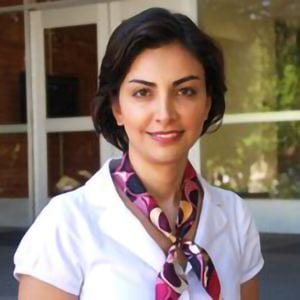
Mona Jarrahi
University of California Los Angeles USA
Plenary lecture
“Engineering Terahertz Waves: From Nanoscale to Chipscale”
Read bio of Mona Jarrahi
Mona Jarrahi is a Professor and Northrop Grumman Endowed Chair in Electrical and Computer Engineering at the University of California Los Angeles, where she directs the Terahertz Electronics Laboratory. Following postdoctoral research at the University of California Berkeley and an Assistant Professorship at the University of Michigan Ann Arbor, she joined UCLA in 2013. Her research develops ultrafast electronic and optoelectronic devices and integrated systems for terahertz, infrared and millimeter-wave sensing, imaging, computing and communication, using novel materials, plasmonic nanostructures and quantum structures. Her work has resulted in more than 400 publications and 280 invited talks. Her awards include the Presidential Early Career Award for Scientists and Engineers, a Moore Inventor Fellowship, a Guggenheim Fellowship and the IET A F Harvey Engineering Research Prize. She is a Fellow of AAAS, IEEE, Optica, SPIE, APS and the Institute of Physics.
Plenary Speaker
Natalia M. Litchinitser
Duke University USA
Read bio of Natalia M. Litchinitser
Natalia Litchinitser is a Michael J. Fitzpatrick Distinguished Professor of Electrical and Computer Engineering, Professor of Physics and Mechanical Engineering, and Materials Science at Duke University. Her research focuses on nonlinear and quantum optics in engineered nanostructures, metamaterials, and topological photonics, as well as on the engineering of light beams themselves. Natalia Litchinitser was previously a Professor of Electrical Engineering at the University at Buffalo, The State University of New York, a Member of Technical Staff at Bell Laboratories, Lucent Technologies, and a Senior Member of Technical Staff at Tyco Submarine Systems. She authored 8 invited book chapters and more than 350 journal and conference papers. She is a Fellow of IEEE, APS, Optica, and SPIE. She serves as the Research Program Director of the Photonics Materials Program at the Fitzpatrick Institute of Photonics.
Plenary Speaker
David R. Smith
Duke University USA
Read bio of David R. Smith
Dr. David R. Smith is currently the James B. Duke Professor of Electrical and Computer Engineering Department at Duke University. He is also Director of the Center for Metamaterials and Integrated Plasmonics at Duke and holds the positions of Adjunct Associate Professor in the Physics Department at the University of California, San Diego, and Visiting Professor of Physics at Imperial College, London. Dr. Smith received his Ph.D. in 1994 in Physics from the University of California, San Diego (UCSD). Smith and his colleagues at UCSD demonstrated the first left-handed (or negative index) metamaterial at microwave frequencies in 2000—a material that had been predicted theoretically more than thirty years prior by Russian physicist Victor Veselago. Pendry, Schurig and Smith suggested in 2006 that an “invisibility cloak” could be realized by a metamaterial implementation of a transformation optical design. Later that same year, Smith’s group at Duke University reported the demonstration of a transformation optical designed “invisibility cloak” at microwave frequencies. In 2026 he was selected as a NASA Innovative Advanced Concepts (NIAC) fellow for the project “Robotically Assembled Electromagnetic Metamaterials for Long-Range Space Situational Awareness”.
Plenary Speaker
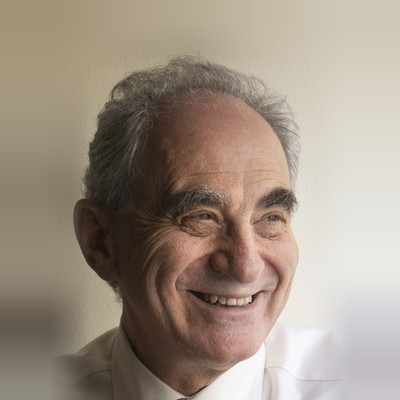
Eli Yablonovitch
University of California, Berkeley USA
Plenary lecture
“The Electromagnetic Spectra of Shape; the Science Behind Cellphone Antennas”
Read bio of Eli Yablonovitch
Eli Yablonovitch is Professor in the Graduate School of Electrical Engineering and Computer Sciences at UC Berkeley and former Director of the NSF Center for Energy Efficient Electronics Science (E3S). He is regarded as a Father of the Photonic BandGap concept, and he coined the term “Photonic Crystal”. In his photovoltaic research, he introduced the 4(n squared) (“Yablonovitch Limit”) light-trapping factor that is in worldwide use for almost all commercial solar panels. His startup company Ethertronics Inc. shipped over 2 billion cellphone antennas, while he was on the Board of Directors. He is a Member of the National Academy of Engineering, the National Academy of Sciences and the National Academy of Inventors, and a Foreign Member of the Royal Society of London. His awards include the Benjamin Franklin Medal, the IEEE Edison Medal, the Isaac Newton Medal of the UK Institute of Physics.
Plenary Speaker
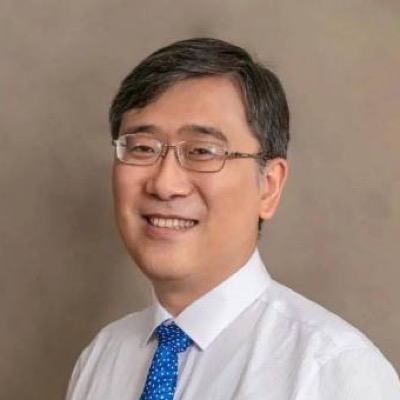
Lei Zhou
Fudan University China
Read bio of Lei Zhou
Lei Zhou received his Ph.D. in 1997 at Fudan University, and worked as a postdoctoral researcher at Tohoku University (1997–2000) and Hong Kong University of Science and Technology (2000–2004). He joined the Physics Department of Fudan University in 2004, served as Chair of the Physics Department from 2020 to 2024, and became the Vice President of Fudan University in 2024. He is a Fellow of OPTICA, APS, and COS. He works in the fields of Metamaterials and Nanophotonics, has published 4 books, over 230 peer-reviewed papers in scientific journals such as Nat. Mater., Nat. Nano., Light: Sci. & Appl., PRL, PRX, etc., and got 18 invention patents granted. His total citations exceed 23000, and his H-index is 66 (Google Scholar). He has been continuously identified as a “Clarivate” Highly Cited Researcher since 2019. He is the winner of many prestigious prizes, including the second Prize of the National Natural Science Award of China and the first Prize of the Natural Science Award of Shanghai. He is the co-founding-Editor of Photonics Insights, and a managing editor of Nanophotonics (2019–2025).
Keynote Speakers
Keynote Speaker
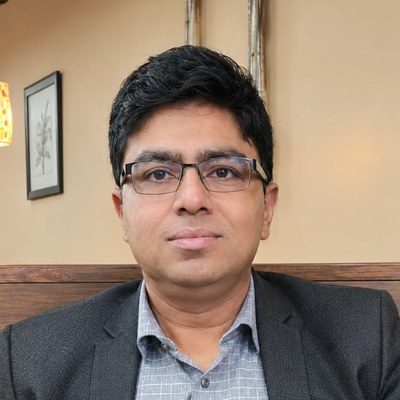
Debashis Chanda
University of Central Florida USA
Keynote lecture
“Dynamically Tunable Visible and IR Structural Colors”
Read bio of Debashis Chanda
Prof. Debashis Chanda is a Professor, jointly appointed with NanoScience Technology Center, Dept. of Physics and College of Optics and Photonics (CREOL), University of Central Florida (UCF). Dr. Chanda received his PhD from University of Toronto. Dr. Chanda completed his post-doctoral research with Prof. John A. Rogers at Beckman Institute, University of Illinois at Urbana-Champaign. Dr. Chanda is a recipient of the 2012 DOE Energy Frontier Research Center (EFRC) Solar Energy Future Direction Innovation Proposal Award, International Displaying Future Award-2016 by Merck Germany, Samsung Global Research Outreach (GRO) Award (2022), Sony Research Award (2022) and UCF Trustee Chair Award (2026). Dr. Chanda’s research has been supported by NSF, DoD, DARPA, Florida Space Institute/NASA, Northrop Grumman, Lockheed Martin etc. Apart from that Dr. Chanda is the founder of start-up, E-Skin Displays Inc., out of his research in California.
Keynote Speaker
Yongmin Liu
Northeastern University USA
Read bio of Yongmin Liu
Dr. Yongmin Liu obtained his Ph.D. from the University of California, Berkeley in 2009. He joined the faculty of Northeastern University in Boston in Fall 2012, and currently he is a full professor with a joint appointment in the Department of Mechanical & Industrial Engineering and the Department of Electrical & Computer Engineering. Dr. Liu’s research interests include nano optics, nanoscale materials and engineering, plasmonics, metamaterials, biophotonics, and artificial intelligence. He has authored and co-authored more than 150 journal papers, including Science, Nature, Nature Photonics, Nature Nanotechnology, Advanced Materials, Physical Review Letters, and Nano Letters. Dr. Liu was a recipient of the Søren Buus Outstanding Research Award at Northeastern University (2024), NSF CAREER Award (2017), Office of Naval Research Young Investigator Award (2016), and SPIE DCS Rising Researcher Award (2016). He is a Fellow of both OPTICA (formerly OSA) and SPIE.
Keynote Speaker
Stefano Maci
University of Siena Italy
Read bio of Stefano Maci
Professor Stefano Maci has been on the faculty of the University of Siena since 1997, where he leads today a 15-member research group. He founded the European School of Antennas in 2004, serving as its Director ever since. An IEEE Fellow since 2004, he served as President of the IEEE Antennas and Propagation Society (AP-S) in 2023 and is currently Chair of the AP-S Field Awards Committee. He has also served as an IEEE AP-S and EurAAP Distinguished Lecturer. He was General Chair of EuCAP 2023. Over the past decade, he has delivered approximately 60 keynote speeches at international conferences. Since 2010, he has coordinated over 50 research projects, including 15 funded by ESA, and co-founded two spin-off companies. His awards include the EurAAP Award (2014), IEEE Schelkunoff Prize (2016), Chen-To Tai Distinguished Educator Award (2016), URSI Dellinger Gold Medal (2020). His research covers antennas, phased arrays, computational electromagnetics, metamaterials, and metasurfaces.
Keynote Speaker
Anatoly Zayats
King's College London UK
Read bio of Anatoly Zayats
Anatoly Zayats holds a Chair in Experimental Physics and heads the Photonics & Nanotechnology group in the Department of Physics at King's College London, where he also leads the Nano-optics and Near-field Spectroscopy Laboratory. He is a Co-Director of the London Centre for Nanotechnology and the London Institute of Advanced Light Technologies. His research interests are in the areas of nanophotonics, plasmonics, metamaterials, optical spin-orbit coupling, plasmonically-derived hot carriers, scanning probe microscopy, nonlinear and ultrafast optics and spectroscopy, and optical properties of surfaces, thin films, semiconductors and low-dimensional structures. He is a founding co-editor-in-chief of the journal Advanced Photonics. He is a Fellow of the Institute of Physics, Optica, SPIE and the Royal Society of Chemistry, and an elected Member of Academia Europaea.
Recorded lectures from earlier editions
While the 2027 program is prepared, selected lectures from earlier AES editions can be watched here. The player loads only when requested, so opening this page sends nothing to YouTube.
Geodesic Lens Antennas for 5G/6G and Satellite CommunicationsOscar Quevedo-Teruel, KTH Royal Institute of Technology, SwedenAES 2024Watch on YouTube, opens in a new tab
Gap Waveguide Technology Helps Design Efficient Antennas ArraysAhmed A. Kishk, Concordia University, CanadaAES 2022Watch on YouTube, opens in a new tab
 Plenary Speaker